

Recording studios are already using AI, mostly for admin, demo vocals and testing ideas quickly in different styles, tempos and keys. Where it stops being useful is finished work: AI tends to drift off a specific melody and give its own version, and tracks generated with it can be difficult to register with PRS, which matters if you intend to earn from them. At Soho Sonic we now also get sent AI-generated tracks by clients asking us to re-record them with human players.
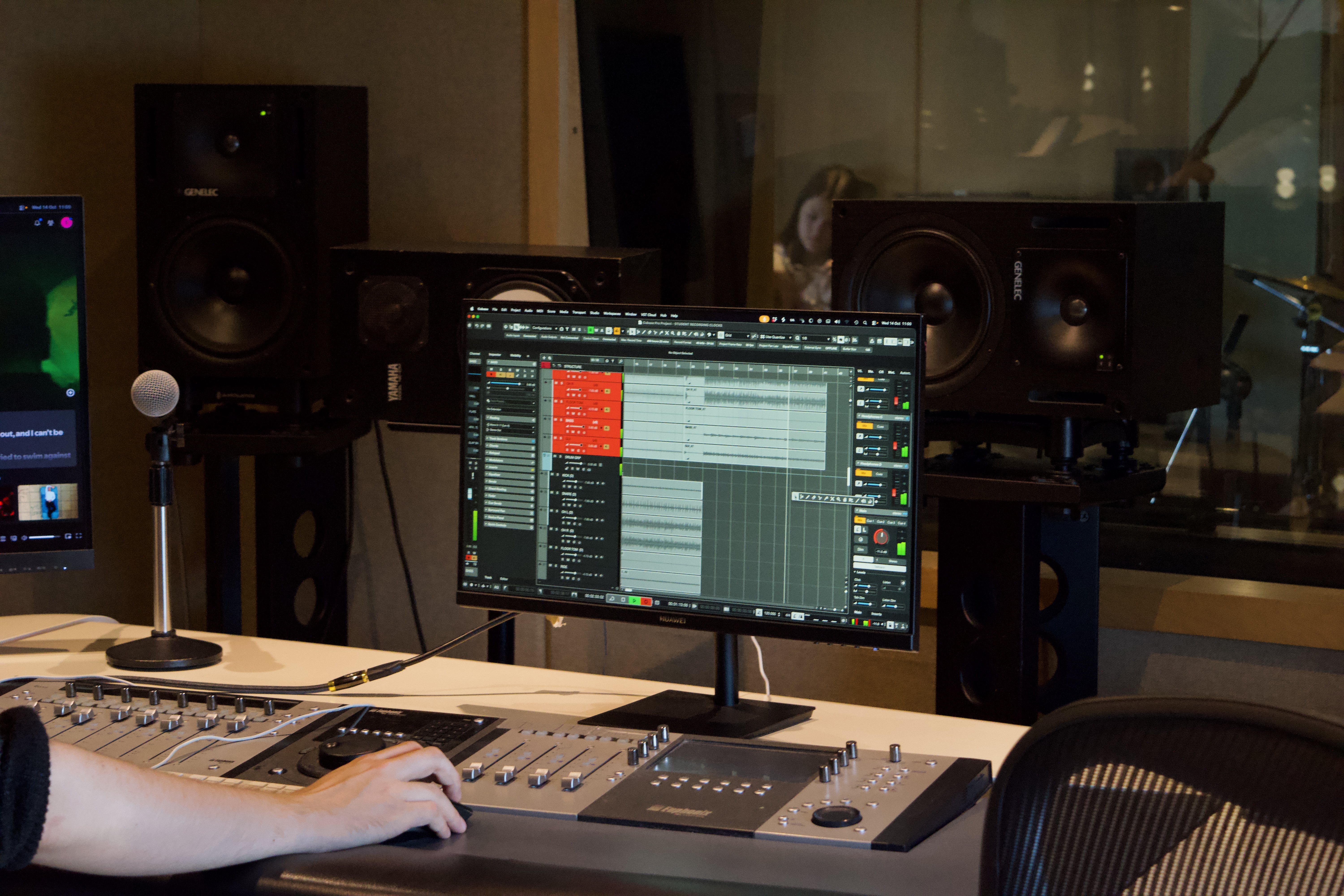
AI in Music Production: What Has Actually Changed in Our Studio
Most writing about AI and music is written by people who do not make records. This is what it actually looks like from inside a working studio, from two people who run one.
The request we did not see coming
Over the last few months we have started receiving a new kind of enquiry. A client sends over a track they generated with AI, and asks us to reproduce it with human musicians.
It is not a complaint about the AI version. They usually like the idea in it. What they want is for it to stop sounding like an AI version.
We do not think this is a bad thing. People are playing with these tools, finding ideas they would not otherwise have found, and then coming to a studio to turn the idea into a record. We are still a crucial part of that. The work is converting something generic into something that keeps the idea but gains a human touch.
AI tools are genuinely good fun for creators. What we notice is that audiences have not warmed to AI music, images or art in the same way. The tools are enjoyable to use. The output, so far, is not something people connect with.
Why AI music sounds the way it does
When we say an AI track sounds generic, we do not mean it sounds bad. The opposite, in a sense.
These systems learn from the tracks they were trained on. Ask for R&B, or hip-hop, or classical, and what comes back is usually a little too perfect in the style. Every expectation of the genre is met. Nothing is out of place.
What makes a human recording distinctive is the opposite of that. It is the mistakes. It is what happens when people jam, or play live, and something unexpected arrives that nobody planned. The take where the timing pushes slightly. The harmony that was not written.
That is what the artists we work with keep reaching for. It is actually the imperfection that makes it perfect.
Where we genuinely use AI
It would be easy to write a piece claiming we do not touch these tools. It would not be true, and nobody would believe it.
Running the place. A good deal of our admin now involves AI: email, booking workflows, studio operations. This is the least interesting use and probably the largest.
Testing an idea in another shape. If something is written, AI is a fast way to hear how it might sit in a different style, at a different tempo, in a different key. Minutes rather than an afternoon.
Demo vocals. If you are producing without a singer in the room and need to demonstrate a melody, AI vocals get close enough to human to communicate the idea. We use this to show a line to an artist, a writer, or a director.
Theatre vocal parts. This one is more specific. We can generate several vocal parts and harmonies, separate them out, and send the individual lines to actors so they can learn their part before rehearsal.
Getting unstuck. Occasionally it suggests a section or a direction we had not considered.
The distinction that matters: we use it as a tool, not as an idea generator. The ideas come from us. AI helps us hear them differently, early in the process.
Where we stop
Two reasons, and the first is commercial rather than artistic.
- Rights and registration. There are unresolved questions about these systems being trained on other people’s catalogues. Some companies will not accept AI-generated material at all. More practically, we need finished tracks we can register with PRS, because music you cannot register is music you cannot earn from. So AI stays out of finished production work.
- It will not hold your idea. This is the creative limit, and even the most advanced systems have it. If you have a specific melody or line and you want it kept as written, AI tends to change it. It gives its own version, its own opinion. It will shift the tempo partway through a track. It does not quite get what you meant.
Which makes it good for general directions, concepts and exploring a style quickly, and much less good once you are actually developing a line or finishing a track. That is the point where we stop.
The disruption that already happened
Here is where we part company with most of the commentary.
We compose for theatre, film and media, and AI is not the thing threatening that work. Production libraries already did that, years ago.
If someone needs music to generate a particular mood, or to do a job in a scene, libraries have served that purpose for a long time. That shift away from commissioning original, bespoke composition for functional music happened well before anyone was talking about AI. What AI is mostly doing is competing with libraries, not with composers.
For functional music, that is fine. AI is a good tool for it. Libraries are good for it too. Both are being used, and both will be.
Where it is displacing work
We do feel it in one part of the studio: a lot of voiceover work has shifted to AI.
That is a real change and worth saying plainly, since voiceover is a service we sell. Where a job needs a clear read of straightforward copy, AI is now a credible option and clients are using it.
What has not shifted is work where the performance is the point: character, direction, the ability to do it differently on the fourth take because someone in the room asked for something the script did not say.
Why original composition holds up
When you are scoring a film and you need a theme for a character built out of a particular emotion, something that changes as the film changes and returns in variations, that is a different job entirely.
Directors and creators do not use composers purely functionally, as a means of executing an idea they already have. They want the exploration. They want another pair of eyes and ears on the piece. They want the interaction.
They work with people partly because they like working with people. They like the feedback process. They like the failures as well as the successes, the mistakes as well as the moments that land. That is not a sentimental observation, it is what they are buying.
The older argument
Music started as a communal thing. Long before it was recorded, it was people playing together in tribes and in ceremonies, reaching a kind of catharsis collectively, closer to a religious act than a product.
It did not arrive as a necessity. It arrived as a human need to express something. And it arrived as a group.
If we reached a point where nobody made music with anyone else, where everyone worked alone with a machine, music would go somewhere different. Not necessarily worse, but different in what it carries emotionally and in the connection it makes. If you want music to stay therapeutic, intimate, a way of releasing and expressing feeling, that function came out of doing it together.
The obvious counter is that AI will get better at interaction, not just output. We think it will still fall short, because the interaction in a room is not mostly verbal.
There is an unspoken energy between two people playing together. It comes through body movement, through breathing, through looking at each other. AI can communicate in language. Human beings communicate well beyond words: through voice, timbre, the way something is said. The same word said two ways means two different things, and you cannot feel that reading it on a screen or hearing it from a generated voice.
That is why we think music creation stays alive, and why we keep building a studio around people being in a room together.
Frequently asked questions (FAQ)
Can AI replace music producers? Not for original work. AI is effective at functional music, quick style exploration and demo material. It struggles to hold a specific melody or idea without changing it, and it cannot provide the interaction that directors and artists are actually buying when they hire a producer: exploration, feedback, and another perspective on the piece.
Why does AI generated music sound generic? Because it is too perfect in the style it learned. These systems are trained on existing tracks, so a request for a genre returns something that meets every expectation of that genre. Human recordings are distinctive largely because of what is unplanned: the mistakes, the timing that pushes, the thing that happens when people play together.
Can you register AI generated music with PRS? It is complicated, and it is a real commercial constraint. There are unresolved questions about systems trained on other people’s catalogues, and some companies will not accept AI-generated material. At Soho Sonic we keep AI out of finished production tracks so they can be registered properly, because music you cannot register is music you cannot earn from.
Do recording studios use AI? Yes, more than most admit. At Soho Sonic we use it for admin and booking workflows, for hearing a written track in a different style, tempo or key, for demo vocals when there is no singer in the room, and for generating vocal parts that actors can learn from. We use it as a tool rather than as an idea generator.
Soho Sonic is a recording studio in London with three central studios, working across music production, audio post and artist development. Written by Yaniv Fridel, with quotes from OJ Shabi’s interview in Headliner. Get in touch.
Written by Yaniv Fridel, Soho Sonic | November 2026